
Leave Management: Complete Guide for 2026

Leave Management is the systematic process of administering, tracking, and managing employee time off including vacation days, sick leave, personal days, parental leave, and other absences from work. It encompasses leave policies, accrual calculations, request approvals, balance tracking, and integration with attendance and payroll systems to ensure fair, consistent, and compliant handling of employee absences.
Beyond simply granting time off, modern Leave Management is a strategic function that balances employee wellbeing with operational continuity. It affects employee satisfaction, workforce planning, legal compliance, and organizational culture while directly impacting payroll accuracy and business operations.
In today’s work environment where work-life balance is paramount and regulations are complex, effective Leave Management is essential for attracting talent, maintaining compliance, and ensuring business continuity during planned and unplanned employee absences.
The Strategic Impact of Managing Time Off Effectively
Leave management might seem administrative, but its impact extends throughout the organization:
Employee Satisfaction: 87% of employees consider paid time off extremely important when evaluating jobs. Fair, transparent leave management is crucial for attraction and retention.
Legal Compliance: Leave regulations vary by jurisdiction and mandate specific entitlements for vacation, sick leave, parental leave, and other categories. Non-compliance results in penalties, lawsuits, and reputational damage.
Workforce Planning: Unmanaged leave creates coverage gaps, operational disruptions, and productivity losses. Strategic leave management ensures business continuity through proper planning and coverage.
Cost Management: Leave represents significant cost through paid time off and replacement labor. Proper leave management optimizes these costs while preventing abuse and maintaining fairness.
Payroll Accuracy: Leave directly impacts payroll calculations. Integration between leave and payroll systems ensures accurate salary processing, deductions, and compliance reporting.
Organizational Culture: How organizations handle leave reflects their values. Generous, well-managed leave policies demonstrate commitment to employee wellbeing and work-life balance, strengthening culture and engagement.
From Paper Forms to Intelligent Automation
Leave Management has transformed significantly with technological advancement:
 Manual Paper Systems:
Employees submitted handwritten leave applications to managers who approved or rejected them manually. HR maintained physical leave registers tracking balances by hand. This process was slow, error-prone, and lacked transparency.
Manual Paper Systems:
Employees submitted handwritten leave applications to managers who approved or rejected them manually. HR maintained physical leave registers tracking balances by hand. This process was slow, error-prone, and lacked transparency.  Spreadsheet Era:
Excel spreadsheets replaced paper registers, allowing basic calculations and centralized tracking. However, spreadsheets still required manual updates, lacked workflow automation, and were prone to version control issues.
Spreadsheet Era:
Excel spreadsheets replaced paper registers, allowing basic calculations and centralized tracking. However, spreadsheets still required manual updates, lacked workflow automation, and were prone to version control issues.  Desktop Software:
Standalone leave management software automated calculations and provided basic reporting. However, these systems required manual data entry, lacked mobile access, and didn’t integrate well with other HR systems.
Desktop Software:
Standalone leave management software automated calculations and provided basic reporting. However, these systems required manual data entry, lacked mobile access, and didn’t integrate well with other HR systems. 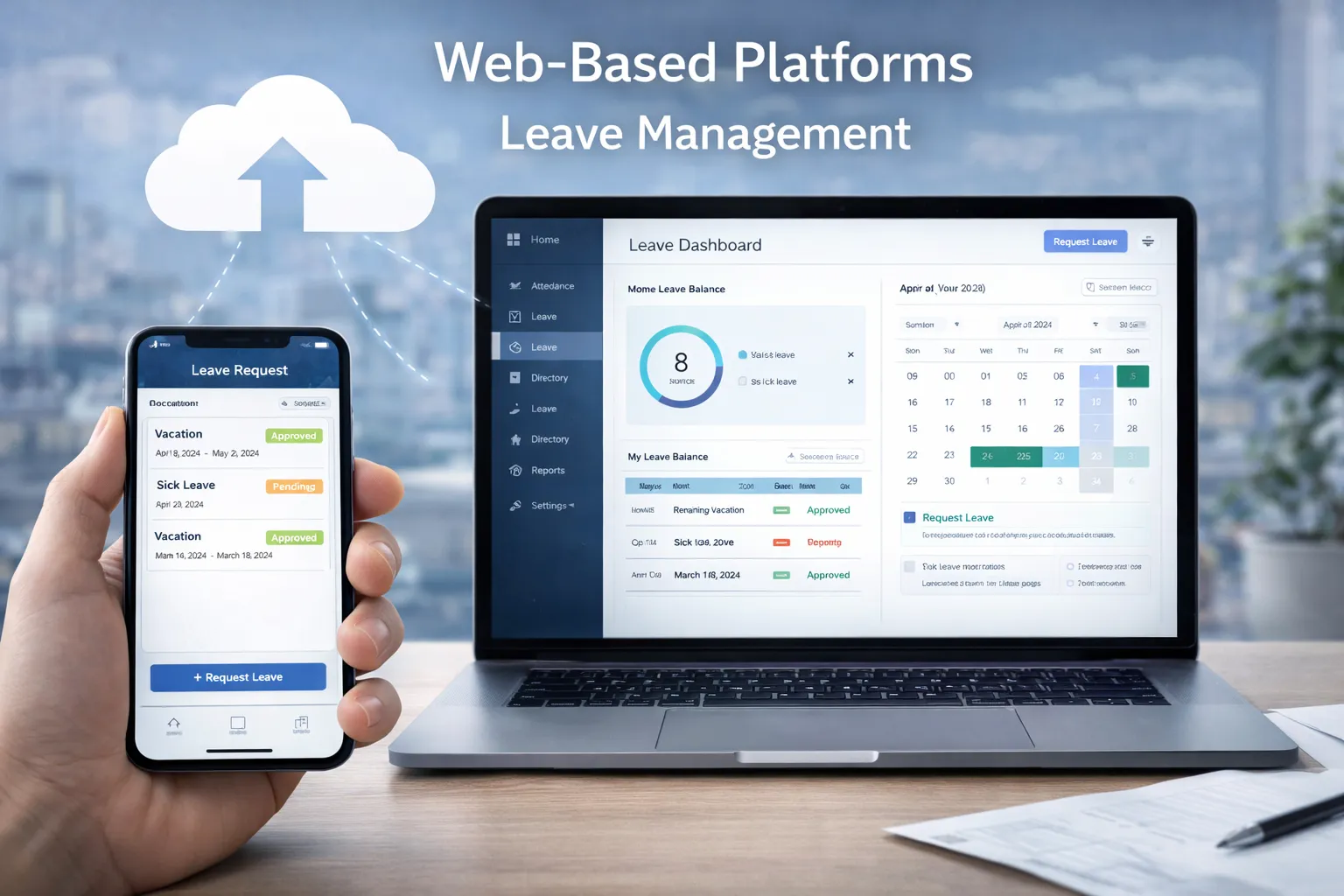 Web-Based Platforms:
Cloud-based leave management systems provided employee self-service, automated workflows, real-time balance visibility, and integration with attendance and payroll. Mobile access enabled anytime, anywhere leave management.
Web-Based Platforms:
Cloud-based leave management systems provided employee self-service, automated workflows, real-time balance visibility, and integration with attendance and payroll. Mobile access enabled anytime, anywhere leave management. 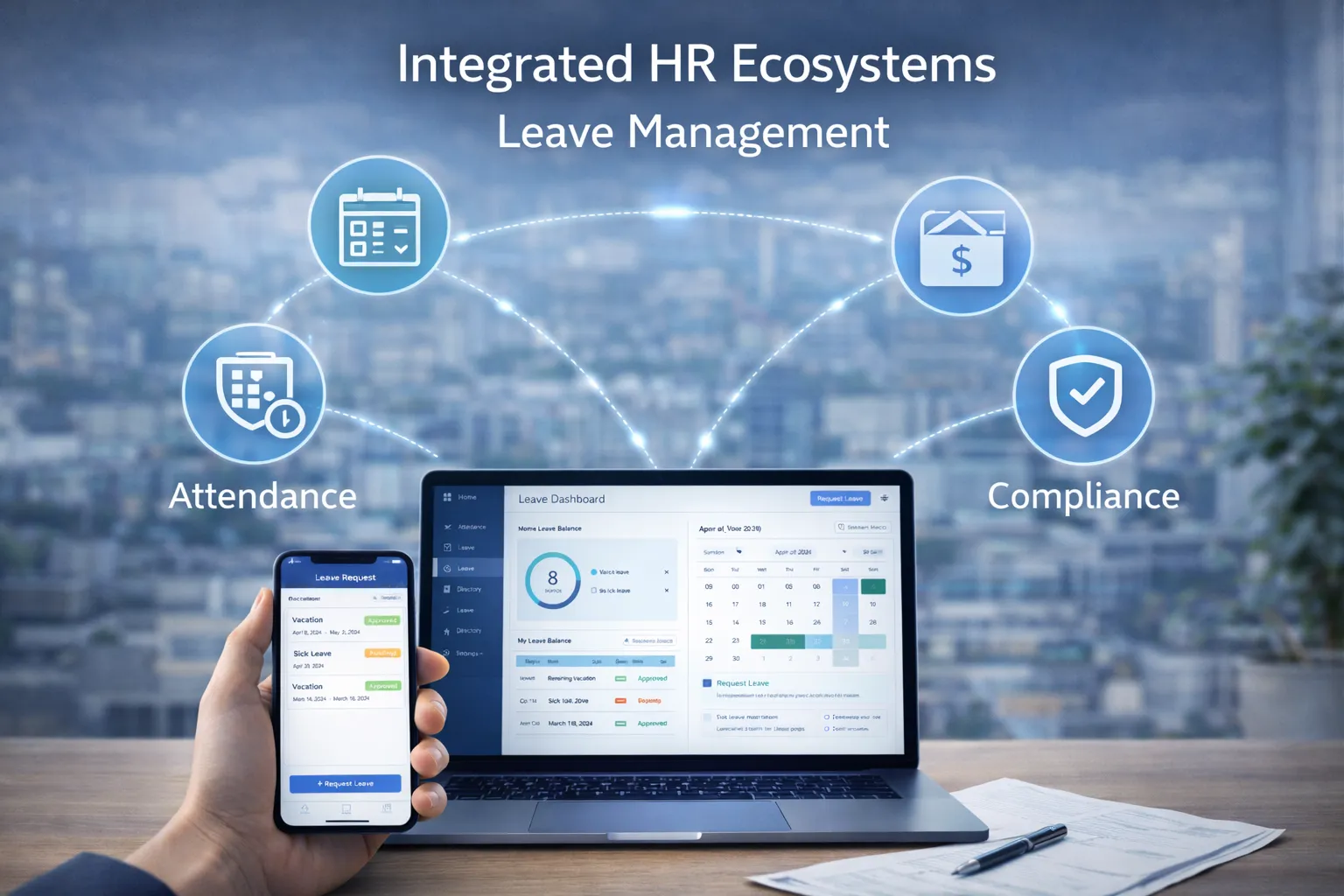 Integrated HR Ecosystems:
Leave management became part of unified HRMS platforms, integrating attendance, payroll, shift planning, and compliance. This ensured consistent data, reduced duplication, and improved workforce planning across departments.
Integrated HR Ecosystems:
Leave management became part of unified HRMS platforms, integrating attendance, payroll, shift planning, and compliance. This ensured consistent data, reduced duplication, and improved workforce planning across departments.  AI-Powered Solutions:
Artificial intelligence predicts leave patterns, suggests optimal leave scheduling, identifies potential coverage issues, and provides intelligent insights that help balance employee needs with business requirements.
AI-Powered Solutions:
Artificial intelligence predicts leave patterns, suggests optimal leave scheduling, identifies potential coverage issues, and provides intelligent insights that help balance employee needs with business requirements. Leave Types & Categories
Organizations need flexible leave structures accommodating various absence reasons and legal requirements.
Earned Leave / Vacation Leave: Paid time off accrued based on service, used at employee discretion for rest, recreation, or personal matters. Typically accrues monthly and may carry forward or expire based on policy.
Sick Leave: Paid or unpaid time off for employee illness, injury, or medical appointments. Some jurisdictions mandate specific sick leave entitlements and restrict reasons for denial.
Casual Leave: Short-term leave for urgent personal matters, typically taken on short notice. Usually limited in duration and may not carry forward to the next year.
Parental Leave: Maternity, paternity, and adoption leave mandated by law in many jurisdictions. Includes prenatal care, childbirth recovery, and infant care with job protection guarantees.
Bereavement Leave: Time off following the death of family members. Duration typically varies based on relationship closeness, with immediate family receiving more days than extended family.
Sabbatical Leave: Extended unpaid leave for personal development, education, travel, or rest after long service. Often requires minimum tenure and advance notice.
Compensatory Off: Time off granted in lieu of overtime work or working on rest days. Typically earned at 1:1 or premium ratios and must be taken within specified timeframes.
Public Holidays: Nationally or locally mandated holidays when businesses typically close. May vary by location for multi-site organizations and require careful tracking.
Leave Without Pay: Unpaid absence when paid leave is exhausted or for reasons not covered by paid leave policies. Requires proper approval and affects payroll and benefits.
Special Leave: Category for unique circumstances including jury duty, blood donation, voting, religious observances, or emergencies. Policies vary widely by organization and location.
Leave Accrual & Entitlements
Defining how employees earn leave ensures fairness and manages organizational obligations.
Accrual Methods: Leave can accrue monthly, quarterly, or annually. Monthly accrual provides continuous availability, while annual allocation simplifies administration but may delay access for new hires.
Service-Based Accrual: Many organizations increase leave entitlements with tenure, rewarding loyalty and retaining experienced employees. Accrual rates may increase after 3, 5, or 10 years of service.
Pro-rata Calculation: New hires and mid-year joiners receive proportional leave based on service duration. Exiting employees may have leave encashment or forfeiture calculated pro-rata.
Employment Type: Full-time, part-time, and contract employees often have different entitlements. Part-time accrual is typically proportional to work hours compared to full-time equivalents.
Probation Rules: Some organizations restrict leave during probationary periods or provide reduced entitlements until confirmation, balancing operational needs with employee flexibility.
Carry Forward Rules: Policies determine if unused leave carries to the next year, with limits on maximum carry forward, expiry timelines, or mandatory minimum usage.
Negative Balance: Some organizations allow leave advances where employees can take leave before accruing sufficient balance, either automatically or with approval, deducted from future accruals.
Leave Encashment: Policies allowing employees to convert unused leave to cash, either annually, at exit, or upon reaching maximum accumulation limits, balancing leave utilization with financial flexibility.
Leave Request & Approval Workflow
Streamlined processes ensure timely decisions while maintaining proper authorization.
Self-Service Application: Employee portals and mobile apps allow staff to check balances, view team calendars, and submit leave requests anytime without paperwork or HR intervention.
Manager Approval: Direct managers review leave requests considering team coverage, business priorities, blackout dates, and leave history before approving or rejecting with comments.
Multi-Level Approval: Complex organizations may require approvals from multiple levels, such as immediate manager, department head, and HR, particularly for extended leave or sensitive periods.
Auto-Approval Rules: Configure automatic approval for specific leave types, durations, or circumstances that don’t require managerial discretion, accelerating the process for routine requests.
Blackout Periods: Define periods when leave is restricted due to business criticality, such as year-end closing, peak seasons, or major projects, preventing operational disruption.
Advance Notice Requirements: Policies specifying minimum advance notice for leave requests (e.g., casual leave 1 day, vacation 7 days) ensure adequate planning time.
Emergency Leave: Simplified approval processes for urgent situations where advance notice is impossible, allowing retroactive submission with manager review and approval.
Withdrawal & Cancellation: Allow employees to withdraw submitted requests or cancel approved leave with appropriate workflows, updating balances and team calendars automatically.
Leave Calendar & Team Visibility
Visual tools help balance individual needs with team capacity and operational requirements.
Team Calendar: Consolidated view showing all team member leaves, helping managers identify coverage gaps and make informed approval decisions.
Department View: HR and leadership visibility into department-wide leave patterns identifying potential understaffing issues or coordinating schedules across teams.
Conflict Detection: Automatic alerts when multiple critical team members request overlapping leave, enabling proactive resolution before approving conflicting requests.
Holiday Calendar: Centralized calendar showing company holidays, location-specific holidays, and optional holidays helping employees plan leave effectively.
Leave Distribution: Analytics showing leave concentration by month, quarter, or season helping HR identify trends and recommend policy adjustments.
Capacity Planning: Integration with project management showing resource availability accounting for scheduled leave, enabling realistic project planning and commitment.
Integration with Attendance & Payroll
Seamless connections ensure data consistency across HR systems.
Attendance Synchronization: Approved leave automatically updates attendance records, marking leave days appropriately and excluding them from present day calculations.
Payroll Integration: Leave data flows to payroll indicating paid versus unpaid leave days, enabling accurate salary calculations, deductions, and statutory compliance.
Leave Without Pay Impact: Automatic salary deduction calculations for unpaid leave days based on per-day salary, with proper reflection in payslips and tax documents.
Statutory Reporting: Leave data contributes to regulatory reports including annual returns, labor department filings, and audit documentation.
Benefits Impact: Extended unpaid leave may affect benefits like health insurance, retirement contributions, or other perks, requiring integration with benefits administration.
Final Settlement: Leave balances automatically calculate encashment amounts in full and final settlement, considering eligibility, service duration, and company policy.
Statutory Leave Compliance
Navigate complex legal requirements across different jurisdictions.
Minimum Entitlements: Ensure compliance with legally mandated minimum leave days including annual leave, sick leave, and public holidays varying by country, state, and industry.
Maternity Leave: Comply with maternity leave regulations including duration (typically 12-26 weeks), payment requirements, job protection, and nursing break entitlements.
Paternity Leave: Provide legally required paternity leave, which varies significantly across jurisdictions from zero days to several weeks with varying payment obligations.
Medical Leave: Compliance with laws governing extended medical leave including disability leave, serious illness provisions, and documentation requirements.
Family & Medical Leave: U.S. organizations must comply with FMLA providing up to 12 weeks unpaid leave for specific family and medical reasons with job protection.
Documentation Requirements: Maintain proper documentation including medical certificates, birth certificates, or other supporting documents as mandated by law for specific leave types.
Notice Periods: Comply with legal requirements for notice periods when taking certain types of leave, particularly extended medical or maternity leave.
Record Retention: Maintain leave records for legally specified periods (typically 3-7 years) in formats acceptable for labor department inspections and audits.
Leave Policies & Communication
Clear policies prevent confusion, disputes, and ensure consistent application.
Policy Documentation: Comprehensive written policies covering all leave types, entitlements, accrual rules, approval processes, and special circumstances accessible to all employees.
Employee Handbook: Include leave policies in employee handbooks distributed at onboarding, with acknowledgment of receipt and understanding.
Policy Updates: Regular review and update of leave policies to reflect legal changes, business needs, and employee feedback with clear communication of changes.
Manager Training: Train managers on leave policies, approval responsibilities, handling sensitive leave situations, and maintaining confidentiality and fairness.
Employee Education: Educate employees on how to check balances, apply for leave, understand accrual, plan leave effectively, and follow proper procedures.
FAQ Resources: Maintain comprehensive FAQ addressing common leave questions, special situations, and policy interpretations reducing HR queries.
Leave Analytics & Reporting
Transform leave data into insights supporting better decisions.
Leave Utilization Reports: Track average leave taken per employee, department, or location identifying under-utilization that may indicate burnout risk or over-utilization suggesting possible abuse.
Leave Liability: Calculate total leave liability (accrued but not taken leave) representing financial obligation if all employees encash maximum eligible leave simultaneously.
Pattern Analysis: Identify patterns like frequent Monday/Friday absences, long weekend extensions, or suspicious leave trends requiring intervention.
Department Comparison: Compare leave metrics across departments identifying units with healthier work-life balance versus those with concerning patterns.
Predictive Analytics: Use historical data to predict future leave patterns helping plan for seasonal absences, optimize scheduling, and prevent coverage gaps.
Compliance Reports: Generate reports demonstrating compliance with statutory leave requirements for labor department audits and internal reviews.
Cost Analysis: Calculate total cost of paid leave including direct salary costs and replacement labor expenses informing budget planning and policy decisions.
Trend Analysis: Track leave trends over months and years identifying increasing or decreasing utilization, changing patterns, or emerging issues.
Leave Management Challenges

Manual Processes: Spreadsheet-based leave tracking is time-consuming, error-prone, and doesn’t scale. Manual calculations of accruals, balances, and entitlements consume HR time while generating errors.
Lack of Transparency: Employees can’t easily check balances, see team calendars, or track request status, generating constant HR queries and creating frustration.
Approval Delays: Paper-based or email approvals get lost, delayed, or forgotten, frustrating employees who can’t plan personal commitments and managers who face last-minute coverage issues.
Policy Inconsistency: Without automation, applying complex policies consistently is nearly impossible, leading to perceived favoritism, disputes, and potential legal issues.
Integration Gaps: Disconnected leave, attendance, and payroll systems require manual data transfer, creating errors, delays, and reconciliation nightmares at month-end.
Compliance Risk: Tracking statutory leave requirements across multiple jurisdictions manually exposes organizations to violations, penalties, and lawsuits.
Coverage Issues: Without visibility into team leave calendars, managers approve conflicting leaves creating operational disruptions and service failures.
Leave Abuse: Manual systems struggle to detect patterns suggesting leave abuse like frequent Friday absences, long weekend extensions, or suspicious medical leave.
Reporting Difficulty: Generating leave reports from spreadsheets is tedious and error-prone, limiting ability to analyze trends, calculate liability, or make data-driven decisions.
Poor Employee Experience: Complicated leave processes requiring paperwork, in-person approvals, and manual balance inquiries frustrate employees and damage satisfaction.
How Technology Transforms Leave Administration
Digital leave management leverages technology to automate administration, ensure compliance, and enhance employee experience.
Self-Service Portals: Employees check balances, view team calendars, submit requests, and track status from web or mobile apps without HR intervention, reducing HR workload by 70%.
Automated Workflows: Leave requests route automatically to appropriate approvers with configurable rules, sending reminders and escalations ensuring timely decisions without manual follow-up.
Real-Time Calculations: System automatically calculates accruals, balances, carry forwards, and entitlements based on configured policies eliminating manual calculations and errors.
Policy Automation: Complex leave policies including accrual rules, carry forward limits, encashment eligibility, and approval hierarchies are configured once and applied consistently forever.
Calendar Integration: Integrated team calendars show who’s on leave, identify conflicts before approval, and help managers make informed decisions balancing individual requests with team capacity.
Compliance Management: Built-in compliance for statutory leave requirements across jurisdictions with automatic updates as regulations change, reducing legal risk.
Seamless Integration: Automatic data flow to attendance and payroll systems ensures consistency, eliminates manual transfers, and guarantees accurate salary calculations.
Mobile Access: Full-featured mobile apps enable leave management anywhere, anytime, particularly valuable for field teams and managers who travel frequently.
Intelligent Alerts: Automatic notifications for pending approvals, low balances, expiring leave, or unusual patterns keep everyone informed without manual monitoring.
Advanced Analytics: Transform leave data into insights about utilization patterns, liability, compliance, and trends supporting strategic workforce planning.
“ Moxiego’s Leave Management module is designed to simplify leave requests, automate approvals, and provide real-time leave visibility while ensuring policy compliance and workforce balance. ” Miinfotech
Proven Strategies for Effective Leave Administration
Automate Everything: Invest in leave management software that automates accruals, approvals, integrations, and reporting. Automation eliminates 90% of leave administration work and errors.
Clear Policies: Document comprehensive leave policies covering all leave types, entitlements, accrual methods, approval processes, and special situations. Clarity prevents disputes and ensures consistency.
Encourage Usage: Promote healthy work-life balance by encouraging employees to use their leave. Unused leave indicates potential burnout and represents growing financial liability.
Manager Training: Train managers on approval responsibilities, considering coverage when evaluating requests, handling sensitive situations, and maintaining confidentiality and fairness.
Plan Ahead: Encourage employees to plan and communicate leave in advance. Advance planning enables better coverage arrangements and prevents last-minute operational disruptions.
Fair Enforcement: Apply leave policies consistently across all employees regardless of level or department. Inconsistent enforcement creates resentment and legal risks.
Regular Audits: Conduct periodic leave audits verifying balance accuracy, policy compliance, proper approvals, and integration with payroll catching issues before they escalate.
Measure Liability: Regularly calculate total leave liability understanding your financial exposure and planning for potential encashment scenarios at fiscal year-end.
Cultural Integration: Integrate leave management into organizational culture where taking time off is normalized, encouraged, and respected rather than discouraged or stigmatized.
Continuous Improvement: Regularly review leave data, gather employee feedback, and refine policies and processes based on insights and changing business needs.
Quantifying the Business Impact
Administrative Time Savings: Automated leave management saves HR teams 20-30 hours monthly on leave administration, balance inquiries, and report generation worth $10,000-18,000 annually.
Reduced Errors: Manual leave tracking has 5-15% error rates affecting payroll and compliance. Automation reduces errors to less than 0.5%, preventing costly corrections and disputes.
Improved Productivity: Clear leave policies and efficient processes reduce time wasted on leave-related confusion, questions, and administrative tasks improving overall organizational productivity.
Better Planning: Visibility into leave patterns and team calendars enables better workforce planning, reducing coverage gaps that cost businesses through service disruptions and overtime.
Compliance Protection: Proper leave management prevents statutory violations that result in penalties of $1,000-50,000 per violation depending on jurisdiction and severity.
Reduced Turnover: Fair, transparent leave management improves satisfaction and retention. Replacing employees costs 50-200% of annual salary, making retention extremely valuable.
Lower Liability: Active leave management encouraging utilization reduces accumulated leave liability that represents growing financial obligation on balance sheets.
Enhanced Reputation: Organizations known for fair, generous leave policies attract better talent, reduce recruiting costs, and strengthen employer brand value.
A Framework for Success

Step 1: Assess Current State Evaluate existing leave processes, identify pain points, measure current error rates, calculate leave liability, and understand employee satisfaction with leave management.
Step 2: Review Legal Requirements Understand statutory leave obligations across all jurisdictions where you operate including minimum entitlements, mandatory leave types, and documentation requirements.
Step 3: Design Leave Policies Create comprehensive leave policies balancing legal compliance, business needs, budget constraints, and employee expectations. Consider industry benchmarks and competitor practices.
Step 4: Select Technology Choose leave management software that automates administration, integrates with existing systems, provides self-service, and scales with organizational growth.
Step 5: Configure System Set up leave types, accrual rules, approval workflows, integration with attendance and payroll, and reporting requirements matching your policies.
Step 6: Migrate Data Transfer historical leave data including balances, transactions, and accruals ensuring accuracy before going live with new system.
Step 7: Train Organization Comprehensive training for employees on using self-service, managers on approval responsibilities, and HR on system administration and reporting.
Step 8: Monitor & Optimize Track system adoption, measure accuracy, calculate time savings, gather feedback, and continuously refine policies and processes for optimal results.
What to Look for in Leave Management Software
Comprehensive Leave Types: Support for unlimited leave categories including earned, sick, casual, parental, compensatory, unpaid, and custom types accommodating diverse organizational needs.
Flexible Accrual Rules: Configurable accrual methods including monthly, quarterly, annual, service-based, and pro-rata calculations matching your policy complexity.
Automated Workflows: Intelligent routing of leave requests to appropriate approvers with reminders, escalations, and configurable multi-level approval chains.
Self-Service Portal: Intuitive employee interface for checking balances, submitting requests, viewing team calendars, and tracking request status reducing HR queries by 70%.
Real-Time Balance Tracking: Automatic calculation and display of current balances, pending requests, accrued amounts, and projected future balances providing complete transparency.
Team Calendar: Visual representation of team leave helping managers identify conflicts, plan coverage, and make informed approval decisions.
Seamless Integration: Native integration with attendance, payroll, and HRMS ensuring data consistency and eliminating manual data transfers.
Mobile Application: Full-featured mobile apps enabling employees and managers to handle leave management on the go from smartphones and tablets.
Compliance Management: Built-in support for statutory leave requirements across multiple jurisdictions with automatic updates as regulations change.
Advanced Analytics: Comprehensive reporting on utilization, liability, patterns, and trends with customizable reports and data export capabilities.
Policy Automation: Rules engine that automatically applies complex policies including carry forward, encashment, negative balance, and pro-rata calculations consistently.
Scalability: Solution grows with your organization from 10 to 10,000+ employees across multiple locations without performance issues or expensive upgrades.
The Complete Leave Administration Solution
Moxiego delivers comprehensive leave management that combines automation, compliance, and exceptional employee experience in one powerful platform.
Effortless Leave Administration: Automate accruals, approvals, calculations, and reporting eliminating manual work and reducing HR workload by 70%.
Employee Self-Service: Empower employees with 24/7 access to check balances, submit requests, view team calendars, and track status via web and mobile apps.
Intelligent Workflows: Automated approval routing with configurable rules, reminders, and escalations ensuring timely decisions without manual follow-up.
Complete Integration: Seamless connection with attendance and payroll systems ensuring data consistency and accurate salary calculations without manual transfers.
Real-Time Visibility: Live dashboards showing leave balances, pending requests, team calendars, and utilization trends enabling data-driven decisions.
Statutory Compliance: Built-in compliance for leave regulations across jurisdictions with automatic updates ensuring you’re always compliant.
Advanced Analytics: Transform leave data into insights about utilization patterns, financial liability, compliance, and trends supporting strategic planning.
Mobile First: Full-featured mobile apps enable complete leave management from anywhere, perfect for distributed teams and mobile workforces.