Asset Management: Complete Guide for 2026
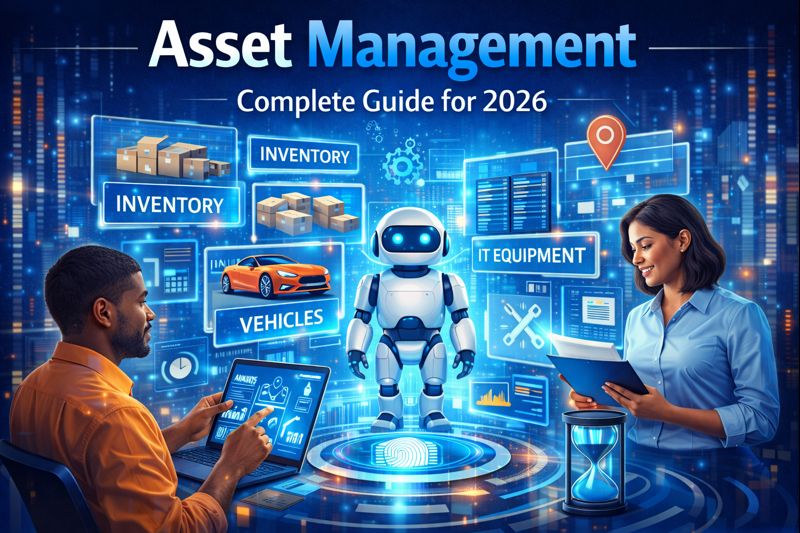
Asset Management is the systematic process of tracking, maintaining, and optimizing organizational assets throughout their lifecycle from procurement to disposal. It encompasses asset acquisition, allocation, tracking, maintenance, utilization monitoring, depreciation calculation, and eventual retirement ensuring organizations maximize asset value while maintaining proper accountability.
Beyond simply tracking equipment, modern Asset Management is a strategic function that optimizes capital investments, ensures operational continuity, prevents losses, and supports compliance. It involves asset utilization analysis, preventive maintenance, replacement planning, and financial reporting that transform how organizations manage physical and digital resources.
In today’s business environment where assets represent significant capital investment and operational dependencies, effective Asset Management is essential for cost optimization, compliance assurance, productivity maintenance, loss prevention, and making informed decisions about asset acquisition, utilization, and replacement.
The Strategic Impact of Managing Assets Effectively
Proper asset management affects financial performance, operational efficiency, and organizational success:
Capital Optimization: Assets typically represent 30-60% of organizational capital. Effective asset management maximizes return on investment through optimal utilization, timely maintenance, and strategic replacement decisions.
Cost Control: Poor asset management results in over-purchasing (buying assets already owned), under-utilization (idle assets consuming resources), and premature replacement (discarding serviceable assets) wasting millions annually.
Operational Continuity: Equipment failures disrupt operations, delay projects, and impact customer service. Preventive maintenance and proactive replacement prevent costly downtime and service interruptions.
Theft Prevention: Organizations lose 5-10% of assets annually to theft, loss, or misplacement. Proper tracking and accountability reduce losses saving thousands to millions depending on asset values.
Compliance Assurance: Regulations require accurate asset records for financial reporting, tax compliance, and industry-specific requirements. Poor records lead to audit findings, penalties, and financial restatements.
Insurance Protection: Accurate asset inventories ensure proper insurance coverage, streamline claims processing, and prevent over-insurance (wasting premiums) or under-insurance (inadequate protection).
Financial Accuracy: Proper depreciation tracking, asset valuation, and disposal recording ensure accurate balance sheets, income statements, and tax filings supporting sound financial management.
From Manual Ledgers to Intelligent Tracking
Asset Management has transformed significantly with technological advancement:
 Manual Ledgers:
Organizations maintained handwritten asset registers recording purchases, assignments, and disposals. Physical asset tags were manually matched to ledger entries. This process was time-consuming, error-prone, and provided no real-time visibility.
Manual Ledgers:
Organizations maintained handwritten asset registers recording purchases, assignments, and disposals. Physical asset tags were manually matched to ledger entries. This process was time-consuming, error-prone, and provided no real-time visibility.
 Spreadsheet Tracking:
Excel spreadsheets replaced paper ledgers allowing basic calculations and sorting. However, updates remained manual, version control was problematic, and tracking physical assets required separate processes.
Spreadsheet Tracking:
Excel spreadsheets replaced paper ledgers allowing basic calculations and sorting. However, updates remained manual, version control was problematic, and tracking physical assets required separate processes.  Barcode Systems:
Barcode labels on assets with handheld scanners enabled faster physical audits and improved accuracy. However, systems were standalone, lacked integration, and required manual data synchronization.
 Desktop Software:
Dedicated asset management software automated tracking, depreciation calculations, and reporting. However, these systems required on-premise infrastructure, lacked mobile capabilities, and offered limited integration.
Desktop Software:
Dedicated asset management software automated tracking, depreciation calculations, and reporting. However, these systems required on-premise infrastructure, lacked mobile capabilities, and offered limited integration.  Cloud-Based Platforms:
Web-based asset management systems provided universal access, automated workflows, mobile tracking, real-time visibility, and integration with procurement, finance, and HR systems enabling comprehensive asset lifecycle management.
Cloud-Based Platforms:
Web-based asset management systems provided universal access, automated workflows, mobile tracking, real-time visibility, and integration with procurement, finance, and HR systems enabling comprehensive asset lifecycle management.  IoT & AI-Powered Solutions:
Internet of Things sensors provide real-time asset location and condition monitoring. Artificial intelligence predicts maintenance needs, optimizes utilization, suggests replacement timing, and provides intelligent insights that transform reactive asset management into proactive optimization.
IoT & AI-Powered Solutions:
Internet of Things sensors provide real-time asset location and condition monitoring. Artificial intelligence predicts maintenance needs, optimizes utilization, suggests replacement timing, and provides intelligent insights that transform reactive asset management into proactive optimization. Asset Categories & Classification
Organizing assets for effective tracking and management.
IT Assets: Computers, laptops, tablets, smartphones, servers, networking equipment, software licenses, and peripherals representing technology infrastructure enabling business operations.
Office Equipment: Furniture, printers, copiers, projectors, phones, whiteboards, and other office supplies supporting daily workplace functionality and employee productivity.
Vehicles: Company cars, trucks, vans, forklifts, and other transportation assets used for business operations, sales, delivery, or employee transportation.
Machinery & Equipment: Manufacturing equipment, tools, construction machinery, medical devices, or industry-specific equipment central to core business operations.
Facilities & Infrastructure: Buildings, leasehold improvements, HVAC systems, security systems, and other fixed installations supporting business operations.
Digital Assets: Software applications, licenses, digital media, databases, and intellectual property requiring tracking for compliance and optimization.
Small Tools & Accessories: Calculators, chargers, adapters, keyboards, mice, and other portable items prone to loss requiring tracking despite lower individual value.
Asset Hierarchy: Grouping related assets (e.g., desktop computer with monitor, keyboard, mouse as single unit) simplifying tracking while maintaining component visibility.
Asset Acquisition & Onboarding
Bringing new assets into the organization properly.
Procurement Integration: Connection with purchase order systems automatically creating asset records when equipment is ordered capturing details from procurement documents.
Receiving Process: Systematic verification of received assets against purchase orders, inspection for damage, and confirmation of specifications before acceptance.
Asset Registration: Creating complete asset records including make, model, serial number, purchase date, cost, supplier, warranty information, and assignment details.
Tagging & Labeling: Applying unique identifiers through barcode labels, QR codes, RFID tags, or asset numbers enabling quick identification and tracking.
Depreciation Setup: Configuring depreciation method (straight-line, declining balance), useful life, salvage value, and start date for accurate financial tracking.
Insurance Documentation: Recording insurance coverage details, policy numbers, coverage amounts, and renewal dates ensuring adequate protection.
Warranty Tracking: Capturing warranty terms, duration, coverage details, and expiration dates enabling timely claims and informed maintenance decisions.
Initial Assignment: Allocating assets to departments, locations, employees, or projects with proper documentation and acknowledgment establishing accountability.
Asset Assignment & Allocation
Managing who has what and where assets are located.
Employee Assignment: Tracking which assets are assigned to individual employees with acknowledgment of responsibility, usage policies, and return expectations.
Department Allocation: Assigning assets to departments or cost centers for budget tracking, accountability, and proper expense allocation.
Location Tracking: Recording current physical location of assets including building, floor, room, or desk number enabling quick location and retrieval.
Project Assignment: Allocating assets to specific projects or initiatives tracking utilization and costs for accurate project accounting and resource planning.
Custody Chain: Complete history of asset assignments showing who had custody when enabling accountability and investigation if assets go missing.
Check-Out/Check-In: Formal processes for temporary asset loans with expected return dates, condition documentation, and automatic reminders for overdue returns.
Transfer Workflows: Structured processes for moving assets between employees, departments, or locations with proper approvals, documentation, and accountability updates.
Assignment Analytics: Reports on asset distribution by employee, department, or location identifying imbalances, under-utilization, or allocation inefficiencies.
Asset Tracking & Monitoring
Real-time visibility into asset location and status.
Barcode Scanning: Quick asset identification and verification through barcode scanning with mobile devices during audits, transfers, or maintenance activities.
RFID Technology: Radio-frequency identification enabling automatic asset detection and location tracking without line-of-sight scanning improving audit efficiency.
QR Code Tracking: Smartphone-readable QR codes providing instant access to asset details, history, manuals, and support information through simple camera scanning.
GPS Tracking: Real-time location monitoring for vehicles and mobile equipment preventing theft, optimizing routes, and ensuring proper deployment.
IoT Sensors: Connected devices monitoring asset location, usage, condition, or environmental factors (temperature, vibration, hours) providing continuous visibility.
Mobile Audits: Smartphone apps enabling field audits, asset verification, and condition reporting without paper forms or manual data entry.
Geofencing Alerts: Automatic notifications when tracked assets leave designated areas detecting unauthorized movement or theft immediately.
Check-In Kiosks: Self-service stations where employees can check out or return assets with barcode scanning, photos, and electronic acknowledgment.
Maintenance & Service Management
Keeping assets operational and extending useful life.
Preventive Maintenance: Scheduled maintenance based on time intervals (monthly, quarterly) or usage metrics (hours, miles) preventing failures and extending asset life.
Maintenance Scheduling: Calendar-based planning of maintenance activities with automatic work order creation, technician assignment, and reminder notifications.
Work Order Management: Creating, assigning, tracking, and closing maintenance requests with complete documentation of work performed, parts used, and costs incurred.
Service History: Complete maintenance record for each asset showing all services, repairs, parts replacements, and costs informing future decisions and warranty claims.
Vendor Management: Tracking service providers, contracts, contact information, and performance enabling efficient vendor coordination and contract compliance.
Parts Inventory: Managing spare parts, consumables, and replacement components ensuring availability for maintenance while controlling inventory costs.
Cost Tracking: Recording all maintenance expenses by asset enabling total cost of ownership analysis and informing replacement versus repair decisions.
Warranty Claims: Managing warranty claim submission, tracking, and recovery ensuring organizations capture eligible warranty services and reimbursements.
Depreciation & Financial Tracking
Accurate financial accounting for assets.
Depreciation Methods: Support for various methods including straight-line, declining balance, sum-of-years-digits, and units-of-production matching accounting policies and asset types.
Automated Calculations: Monthly or annual depreciation calculations based on configured methods, useful lives, and acquisition dates eliminating manual computation errors.
Book Value Tracking: Real-time calculation of current book value (original cost minus accumulated depreciation) for each asset supporting financial reporting.
Disposal Accounting: Proper calculation of gains or losses on asset disposal, retirement, or sale ensuring accurate financial statements and tax reporting.
Capitalization Policies: Configurable thresholds determining which purchases are capitalized as assets versus expensed immediately based on cost and useful life.
Asset Revaluation: Support for periodic revaluation of assets to fair market value when required by accounting standards or organizational policies.
Financial Reporting: Standard reports including asset register, depreciation schedule, additions/disposals, and book value summaries supporting audits and management.
Tax Compliance: Separate tracking for financial and tax depreciation supporting different reporting requirements and accurate tax filing.
Asset Utilization & Performance
Optimizing asset deployment and identifying opportunities.
Usage Tracking: Monitoring how often assets are used, idle time, and utilization rates identifying under-utilized assets that could be redeployed or disposed.
Performance Metrics: Tracking asset performance including uptime, failure rates, maintenance costs, and productivity contribution evaluating asset effectiveness.
Total Cost of Ownership: Comprehensive cost analysis including acquisition, maintenance, insurance, depreciation, and disposal costs informing purchasing and retention decisions.
Benchmark Analysis: Comparing asset performance against manufacturer specifications, industry standards, or organizational targets identifying substandard assets.
Utilization Optimization: Identifying opportunities to share under-utilized assets, retire idle equipment, or acquire additional capacity where shortages exist.
Replacement Planning: Analysis of asset age, condition, maintenance costs, and performance trends informing optimal replacement timing balancing costs and risks.
ROI Analysis: Calculating return on investment for asset acquisitions comparing actual benefits against costs justifying future investments.
Capacity Planning: Forecasting future asset needs based on business growth, utilization trends, and replacement cycles ensuring adequate resources.
Asset Disposal & Retirement
Proper handling of assets at end of lifecycle.
Disposal Methods: Support for various disposal approaches including sale, donation, trade-in, recycling, or destruction based on asset type and condition.
Approval Workflows: Structured approval processes for asset retirement ensuring proper authorization, financial recording, and compliance with policies.
Data Sanitization: For IT assets, ensuring complete data removal through wiping, degaussing, or physical destruction protecting sensitive information.
Environmental Compliance: Proper disposal of hazardous materials, electronics, or regulated items complying with environmental regulations and corporate sustainability policies.
Sale Management: Managing asset sales including listing, pricing, negotiation, payment, and transfer documentation maximizing recovery value.
Donation Tracking: Recording charitable donations for tax purposes including fair market value assessment, recipient details, and tax receipt documentation.
Certificate of Destruction: Obtaining documentation proving proper disposal especially for sensitive equipment, data storage, or regulated materials.
Financial Recording: Proper accounting for asset disposal including removal from books, calculation of gain/loss, and updating financial records.
Compliance & Audit Support
Meeting regulatory requirements and supporting audits.
Physical Audits: Scheduled asset verification matching physical assets to records identifying discrepancies, missing items, and unauthorized assets.
Audit Trails: Complete logging of all asset transactions including acquisitions, assignments, transfers, maintenance, and disposals supporting compliance and investigations.
Reconciliation: Regular comparison of asset records against financial books, purchase orders, and physical counts ensuring accuracy and identifying discrepancies.
Compliance Reporting: Standard reports supporting regulatory compliance including fixed asset registers, depreciation schedules, and disposal documentation.
Policy Enforcement: Automated validation of asset transactions against organizational policies flagging violations and ensuring consistent application.
License Compliance: For software assets, tracking license counts, usage, and compliance with vendor agreements preventing costly violations.
Insurance Documentation: Maintaining comprehensive asset inventories with valuations, photos, and specifications supporting insurance coverage and claims.
Regulatory Requirements: Meeting industry-specific asset management requirements for healthcare, finance, government, or other regulated sectors.
Asset Management Challenges

Poor Visibility: Without centralized tracking, organizations don’t know what assets they own, where they are, or who has them leading to unnecessary purchases and inefficient utilization.
Spreadsheet Limitations: Excel-based tracking doesn’t scale, lacks automation, has no audit trails, and depends on manual updates creating errors and outdated information.
Theft & Loss: Organizations lose 5-10% of assets annually through theft, misplacement, or lack of accountability costing thousands to millions depending on asset values.
Maintenance Gaps: Reactive maintenance after failures costs 3-10x more than preventive maintenance while causing disruptive downtime and shortened asset life.
Compliance Risks: Inaccurate asset records cause audit findings, incorrect financial statements, tax complications, and potential penalties from regulatory violations.
Over-Purchasing: Buying assets that already exist (but can’t be found) or purchasing excess capacity wastes capital that could be deployed more productively.
Under-Utilization: Idle or under-used assets consume space, insurance, and maintenance costs without delivering value while needed assets remain unacquired.
Disposal Issues: Improper disposal of IT assets creates data security risks, environmental violations, and missed opportunities for asset recovery through resale.
Manual Audits: Physical asset verification without technology requires weeks of manual effort, disrupts operations, and still produces inaccurate results.
Integration Gaps: Disconnected asset, procurement, finance, and HR systems require duplicate data entry creating inconsistencies and reconciliation nightmares.
How Technology Transforms Asset Tracking
Digital asset management leverages technology to automate tracking, optimize utilization, and ensure accountability.
Centralized Repository: Single source of truth for all organizational assets eliminating scattered spreadsheets and providing complete visibility across locations.
Barcode/RFID Scanning: Mobile scanning enables instant asset identification, quick audits, and automated tracking eliminating manual data entry and improving accuracy.
Automated Workflows: Digital approval processes, automatic assignment notifications, and systematic check-out/check-in eliminate manual coordination and paperwork.
Real-Time Visibility: Live dashboards showing asset locations, assignments, status, and utilization providing immediate answers to asset-related questions.
Preventive Maintenance: Automated scheduling, work order creation, and service tracking ensuring assets receive timely maintenance preventing costly failures.
Depreciation Automation: Automatic monthly depreciation calculations and financial reporting eliminating manual computations and ensuring accurate books.
Mobile Access: Smartphone apps enabling asset audits, condition reporting, maintenance recording, and transfers from field or warehouse without desktop access.
Integration Platforms: Seamless connection with procurement, finance, HR, and maintenance systems ensuring data consistency across enterprise.
Analytics & Insights: Comprehensive reporting on utilization, total cost of ownership, maintenance trends, and replacement needs informing strategic decisions.
Compliance Support: Automated audit trails, scheduled physical audits, reconciliation reports, and compliance documentation ensuring regulatory adherence.
“ Moxiego’s Asset Management solution enables seamless asset tracking, simplifies allocation and maintenance, and improves asset visibility across the organization while maintaining data accuracy and control. ” Miinfotech
Proven Strategies for Asset Excellence
Centralize All Assets: Consolidate asset tracking into single platform regardless of type, value, or location ensuring complete visibility and eliminating gaps.
Tag Everything: Apply unique identifiers to all trackable assets from day one making physical verification and accountability possible throughout asset life.
Regular Audits: Schedule quarterly or annual physical audits verifying records against reality identifying discrepancies early before they accumulate.
Automate Depreciation: Configure depreciation rules matching accounting policies and let system calculate automatically eliminating errors and saving time.
Preventive Maintenance: Implement scheduled maintenance programs based on manufacturer recommendations extending asset life and preventing disruptive failures.
Track Total Costs: Record all asset-related costs including maintenance, repairs, insurance, and downtime enabling true total cost of ownership analysis.
Optimize Utilization: Regularly review utilization reports identifying idle assets for redeployment or disposal and gaps requiring additional capacity.
Proper Disposal: Follow formal disposal procedures ensuring data security, environmental compliance, financial recording, and maximizing recovery value.
Employee Accountability: Require formal acknowledgment when assigning assets to employees establishing responsibility and deterring careless handling.
Continuous Improvement: Review metrics, gather user feedback, refine processes, and update configurations keeping system aligned with organizational needs.
Quantifying the Business Impact
Reduced Purchases: Knowing what you own prevents duplicate purchases saving 10-20% of annual asset spending. For organizations spending $1M annually, that’s $100,000-200,000 saved.
Lower Theft/Loss: Proper tracking and accountability reduces asset losses by 50-70% saving thousands to millions depending on asset values and volumes.
Extended Asset Life: Preventive maintenance extends asset life by 20-40% deferring replacement costs and maximizing return on capital investments.
Maintenance Savings: Planned maintenance costs 3-10x less than reactive repairs after failures saving substantial amounts while preventing operational disruption.
Improved Utilization: Identifying and redeploying idle assets prevents 15-25% of unnecessary purchases enabling better capital allocation.
Faster Audits: Automated tracking reduces physical audit time from weeks to days saving hundreds of hours in labor costs and operational disruption.
Compliance Protection: Accurate records prevent audit findings, financial restatements, and penalties that can range from thousands to millions of dollars.
Insurance Optimization: Accurate asset inventories prevent over-insurance (wasting premiums) and ensure adequate coverage for claims recovery.
A Framework for Success

Step 1: Assess Current State Inventory existing assets, evaluate current tracking methods, identify gaps and issues, measure loss rates, and understand compliance requirements.
Step 2: Define Asset Categories Determine what assets will be tracked, establish value thresholds for capitalization, and create logical categorization supporting reporting and management.
Step 3: Select Technology Choose asset management platform matching your needs considering barcode/RFID capabilities, mobile features, integration requirements, and scalability.
Step 4: Design Processes Define procedures for acquisition, assignment, transfer, maintenance, audit, and disposal ensuring systematic handling throughout asset lifecycle.
Step 5: Tag & Catalog Conduct comprehensive physical inventory, apply asset tags, create database records with complete information preparing for go-live.
Step 6: Configure System Set up categories, depreciation rules, workflows, user permissions, integrations, and reporting customizing platform to organizational requirements.
Step 7: Train Users Comprehensive training for asset managers, employees receiving assets, maintenance staff, and finance teams ensuring proper system usage.
Step 8: Monitor & Optimize Track key metrics, conduct regular audits, gather feedback, identify issues, and continuously refine processes improving asset management effectiveness.
What to Look for in Asset Tracking Software
Comprehensive Asset Support: Track all asset types including IT equipment, vehicles, machinery, furniture, and tools from single platform eliminating multiple systems.
Mobile Capabilities: Full-featured mobile apps enabling barcode scanning, audits, condition reporting, and asset management from smartphones and tablets.
Barcode/RFID Support: Native support for barcode and RFID scanning with label printing capabilities enabling efficient physical tracking and verification.
Assignment Tracking: Complete custody chain showing who has what, when, and where with transfer workflows and employee acknowledgment.
Maintenance Management: Preventive maintenance scheduling, work order management, service history tracking, and vendor management extending asset life.
Automated Depreciation: Configurable depreciation methods with automatic monthly calculations supporting multiple methods and reporting requirements.
Financial Integration: Seamless connection with accounting systems for depreciation posting, disposal recording, and financial reporting ensuring accuracy.
Audit Tools: Built-in physical audit capabilities with mobile scanning, discrepancy reporting, and reconciliation supporting compliance verification.
Custom Fields: Flexibility to add asset-specific attributes (warranty info, insurance details, specifications) beyond standard fields accommodating unique needs.
Analytics & Reporting: Comprehensive dashboards and reports on asset inventory, utilization, maintenance, depreciation, and total cost of ownership.
Security & Permissions: Role-based access control ensuring appropriate users can view, edit, assign, or dispose assets based on organizational hierarchy.
Scalability: Solution growing with organization from hundreds to hundreds of thousands of assets without performance issues or expensive upgrades.
The Complete Asset Tracking Solution
Moxiego delivers comprehensive asset management that combines visibility, control, and optimization in one powerful platform.
Complete Asset Visibility: Centralized tracking of all organizational assets across types, locations, and departments providing instant answers about what you own and where.
Mobile Asset Tracking: Barcode scanning, RFID support, and GPS tracking through mobile apps enabling efficient audits and real-time location visibility.
Automated Workflows: Digital check-out/check-in, approval routing, maintenance scheduling, and assignment notifications eliminating manual processes.
Preventive Maintenance: Scheduled maintenance programs with automatic work orders and service tracking extending asset life and preventing failures.
Financial Accuracy: Automated depreciation calculations, disposal accounting, and financial reporting ensuring accurate books and compliance.
Employee Accountability: Formal assignment tracking with electronic acknowledgment and complete custody history establishing clear responsibility.
Real-Time Analytics: Dashboards showing asset utilization, maintenance costs, total cost of ownership, and replacement needs informing strategic decisions.
Seamless Integration: Native connection with procurement, finance, HR, and maintenance systems ensuring data consistency across enterprise.